Spell or Scar? Wildfire Damage and the Insurance of Job Loss
- Abstract coming soon

PhD Student in Economics
University of California San Diego
I am a PhD student in Economics at the University of California San Diego.
My research is in labor and public economics, with a focus on job loss and policies meant to protect displaced workers.
I am also a researcher at the California Policy Lab and California’s Employment Development Department (EDD), where I work with administrative unemployment insurance claims and linked employer–employee wage records.
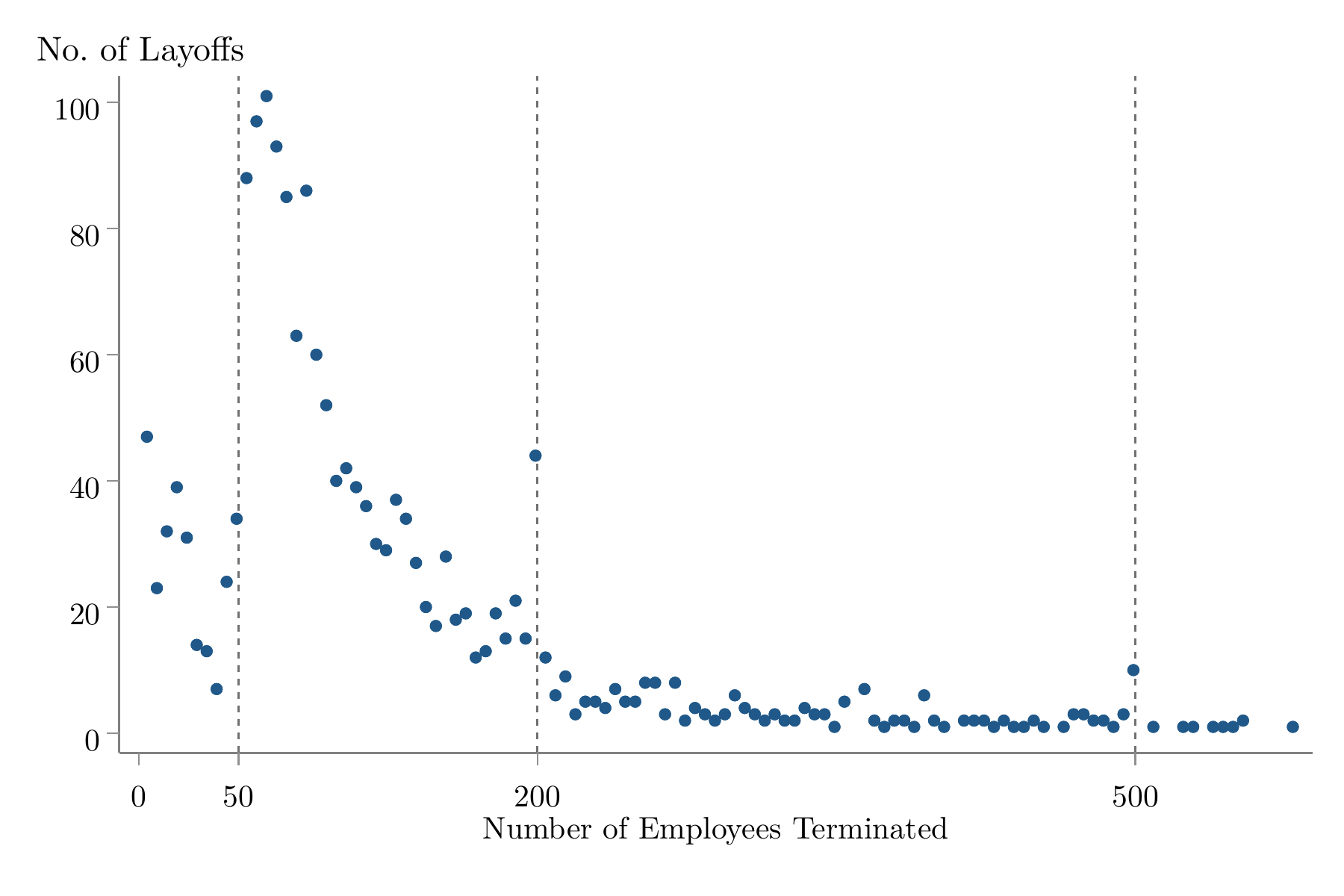
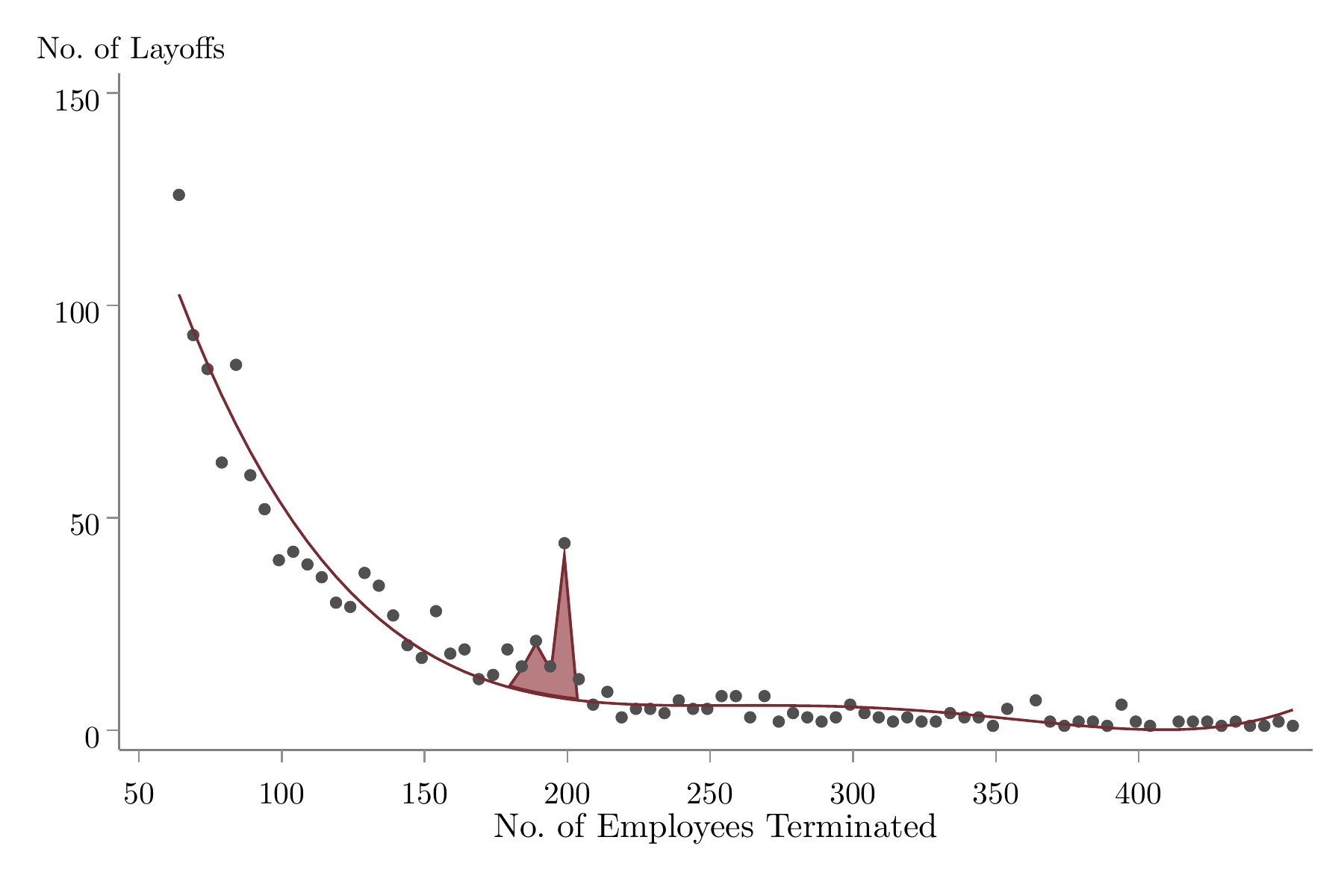
This paper investigates the impact of advance notice requirements on firm behavior during large-scale workforce reductions. We exploit discontinuous policy rules in the Employment Standards Act (ESA) to estimate the cost of additional notice requirements for firms conducting mass terminations in Ontario, Canada. Our novel empirical evidence shows that firms strategically manipulate the scale of layoffs to circumvent additional notice obligations. Specifically, we utilize quasi-experimental variation in notice requirements facilitated by the ESA to estimate an approximate 30% increase in the frequency of layoff events that bunch just below the threshold at which the mandatory notice period discontinuously increases from 8 to 12 weeks. These discrete jumps in mandatory notice reveal that the costs associated with additional notice provisions for displaced workers significantly distort firms’ termination behavior during mass layoffs.
The 2025 Palisades and Eaton wildfires in Los Angeles County destroyed over 13,000 homes and nearly 2,000 business establishments, displacing thousands of residents and workers. This report shows the impact the fires had on workers and local economies and highlights key insights for policymakers responding to natural disasters. In the weeks following the fires, 6,300–8,700 more new regular Unemployment Insurance (UI) claims were filed than would be expected without the fires, a 12–17% increase. An additional 5,000 workers filed claims through the federal Disaster Unemployment Assistance Program.